Prove ChatGPT Market Recommendations in 15–30 Prompts for Marketers
Learn why ChatGPT misses your product in some markets, how query language and exit IP shape recommendations, and run a 15–30 prompt audit to find and fix...
· 14 min read

No, it doesn't, and the gap is predictable once you know what drives it. Three factors decide whether ChatGPT names your product in a given market: the language of the query, whether your product feed is actually integrated through mechanisms like OpenAI's Agentic Commerce Protocol, and baked-in model bias documented in recent arXiv probes. Platforms exist precisely because this variation is measurable, not random.
TL;DR:
- Product visibility in ChatGPT depends heavily on accurate feed data, especially the correct target_country code and localized content, to surface in specific markets.
- Query language influences whether localization occurs, while exit IP determines the regional market and supplier recommendations, both independently affecting recommendation accuracy.
- Training data bias favors US and Global North brands, making local-market recommendations less frequent unless local authoritative content is added to training and feeds.
- Regular testing with varied prompts and controlling for IP ranges reveal true market visibility, highlighting gaps that need feed or content updates.
- Implementing structured feeds, authority local content, and ongoing measurement are essential to improve AI recommendation share and reduce market bias.
Table of Contents
- How ChatGPT finds and ranks products
- Query language, exit IP, and localization: how the market gets chosen
- Empirical bias: why some markets are overrepresented and others invisible
- Product feeds and integrations that enable market-specific recommendations
- How to test and monitor whether ChatGPT recommends your product in each market
- Priority fixes to improve AI visibility across markets
- AuthorityLayer's approach: audit, benchmark, and prioritized remediation
- Strategic next steps for product and marketing leaders
- Next step: run a Free AI Visibility Scan
- FAQ
- Sources
How ChatGPT finds and ranks products
ChatGPT answers product questions in one of two ways: it retrieves information from indexed web sources through its search function, or it generates an answer from patterns learned during training, with no live lookup at all. The second mode is where hallucinated brand names and outdated pricing creep in, because the model is pattern-matching rather than checking a current source.

When ChatGPT does retrieve, it pulls from two kinds of material: general web pages (product pages, reviews, comparison articles) and structured product feeds submitted directly by merchants. The feed path is more reliable because it gives the model clean, unambiguous facts rather than text it has to parse and interpret. That is the entire premise behind OpenAI's Agentic Commerce Protocol, a feed specification merchants can submit to ensure their catalog is represented accurately in shopping-related answers.
A handful of structured signals determine whether a product surfaces at all, and which market it surfaces in:
- target_country, an ISO 3166-1 alpha-2 code in the feed, tells the system which market a listing applies to.
- Seller metadata, including business name, categories, and shipping regions, gives the model context it can't infer from a product title alone.
- Language variants of titles and descriptions need to exist as separate fields, not as tags bolted onto one record.
- Freshness, price accuracy, and stock availability affect whether a listing is trusted enough to recommend, since a model has no reason to surface something that looks stale.
- Authoritative pages, meaning product pages with clear specifications, reviews, and consistent branding, still matter when the model falls back on web retrieval instead of a feed.
The practical consequence is that a product can be perfectly visible in one market and entirely absent in another, not because demand differs, but because the underlying data plumbing differs. A feed with a correct target_country for Germany and no equivalent for Brazil will produce exactly that split, regardless of actual market presence. AuthorityLayer's own analysis of brand discovery signals breaks down how these signals interact in more detail.
Query language, exit IP, and localization: how the market gets chosen
A controlled probe published in August 2026 isolated two variables that marketers routinely conflate: the language a question is asked in, and the exit IP address of the machine asking it. The finding was that these two factors work independently, and both matter. According to the study, query language decides whether ChatGPT even attempts to localize an answer, while exit IP determines which specific market's suppliers get named once localization kicks in.
That separation explains a pattern many teams have noticed without being able to name: asking a question in English, even from a French IP address, often returns a global or US-centric answer rather than a French one. English functions less like a neutral language and more like a default channel to global, English-dominant sources. Ask the same question in French, and the model is far more likely to surface local suppliers tied to that market.
The probe also found that recommendation outputs are unstable across identical runs. Ask the same question five times with the same language and the same exit IP, and you won't get five identical answers. Some findings worth internalizing:
- Language gates whether localization happens at all, independent of where the request physically originates.
- Exit IP then selects which market's suppliers appear, once the model has decided to localize.
- English frequently behaves as a global default rather than a localized signal, even when the user is clearly in a non-English-speaking market.
- Repeated identical prompts produce different top answers often enough that a single test run tells you almost nothing.
For a marketing team, the consequence is direct: measuring "does ChatGPT recommend us in Japan" requires testing in Japanese, from a Japan-based or Japan-routed connection, across multiple runs, not a single English-language query typed from a US office. A single test run with the wrong language will tell you your product is invisible in a market where it may actually be competitive, once asked about correctly. Firms focused on localization and market adaptation point to the same mechanism from the content side: language is not a cosmetic layer, it's a routing decision.
Empirical bias: why some markets are overrepresented and others invisible
Independent of language and IP effects, the models themselves carry a measurable tilt toward certain regions and brands. A ChoiceEval audit of large language models found that Gemini, GPT, and DeepSeek each recommend their own top-ranked entity in a strikingly consistent share of sampled responses, with a pronounced lean toward US and Global North brands across many categories.
Averaged across tested categories, Gemini, GPT, and DeepSeek named their top-ranked brand or entity in 71.2%, 75.9%, and 70.3% of responses respectively, a repetition rate high enough to mean a handful of incumbents absorb most of the visibility in categories like travel or higher education, regardless of how many qualified alternatives exist.

The mechanism behind this is training-data concentration. English-language, US-hosted web content dominates the corpora these models learn from, so when a query doesn't strongly signal a different market, the model defaults to what it has seen most. Categories tied to geography and reputation, travel destinations, university rankings, regional service providers, show this effect most sharply, because the training data itself is lopsided before any retrieval even happens.
The fix isn't adversarial, it's additive: increasing the volume and quality of local-language, locally authoritative content and feed data for a given market gives the model more to draw on besides the default. That doesn't eliminate the tilt, but it narrows the gap between what gets recommended and what actually exists in a market.
Product feeds and integrations that enable market-specific recommendations
OpenAI's Agentic Commerce Protocol is the clearest lever merchants have for closing the localization gap. Rather than hoping the model finds and correctly interprets a product page, merchants submit a structured feed directly, and that feed becomes the authoritative source ChatGPT draws from for shopping-related answers. The developer guidance is explicit: sharing a structured feed and specifying target market fields is the starting point for integration, and it's treated as the primary route to accurate representation.
The feed schema requires a short list of fields to work correctly:
- feed_id and account_id, which identify the merchant and the specific feed being submitted.
- target_country, the same ISO code mentioned earlier, mandatory for a product to surface in a given regional market.
- Categories and seller metadata, which help the model place a product in the right context among competitors.
- Localized title and description fields, stored as distinct records (
title_localized,description_localized) rather than a single field with a language tag.
That last point trips up more engineering teams than it should. A single product record with an English title and a note that a Spanish version "exists elsewhere" doesn't retrieve the same way as a properly separate Spanish-language record tied to the Spanish target_country. Language-gated retrieval, the mechanism described in the probe above, means the model is often looking for content in the query's language specifically, not translating on the fly.
A few operational habits keep a feed useful rather than theoretical. Validate the feed against the published schema before each push, since a malformed target_country field or a missing account_id can silently drop a market from coverage. Build egress-awareness into any internal testing, meaning know what IP range your QA team tests from, so you don't mistake a routing artifact for a real localization failure. And treat update cadence as a freshness signal in itself: a feed that hasn't changed in months starts to look stale to systems that weight recency, even if the underlying products haven't changed.

How to test and monitor whether ChatGPT recommends your product in each market
Measuring AI visibility by market means running a structured prompt set, not asking ChatGPT a favor once and taking the answer at face value. The probe work above gives a clear blueprint for what a sound test looks like.
- Build a prompt set of 15 to 30 queries that vary three things independently: the language of the question, the persona asking it (a first-time buyer versus a procurement professional, for instance), and the specific intent (a direct product name versus a category comparison).
- Control for exit IP and egress deliberately, running the same prompt set from IP ranges tied to each target market rather than from a single office connection.
- Pin the model version and note whether web search was enabled for that run, since both affect retrieval behavior.
- Run each prompt multiple times rather than once, logging every result, because instability across identical runs is itself informative, not noise to average away.
- Tag every result with four variables: query text, query language, model version, and exit IP, so patterns are traceable later rather than anecdotal.
A worrying pattern looks less like "we were never mentioned" and more like inconsistency tied to a specific variable: your brand appears reliably in English-language runs regardless of exit IP, but drops out entirely once the query shifts to the local language of a market where you have real distribution. That's a feed or content gap, not bad luck. AuthorityLayer's step-by-step monitoring approach and its 15 to 30 prompt audit framework follow this same logic at a larger scale.
Pro Tip: Run your audit the same week each month and keep the prompt set identical across runs, so any change you see reflects the market or the model, not a change you made to the test itself.
Priority fixes to improve AI visibility across markets
Once you can see where the gaps are, the fixes split cleanly into low-effort items you should do immediately and structural work that takes longer to pay off.
- Add or correct
target_countryin your product feed for every market you actually serve, since a missing or wrong code is the single most common reason a product is invisible in a specific country. - Fill in seller metadata completely, including business name, categories, and shipping regions, because incomplete metadata reads to the model as an unreliable listing.
- Build localized product page templates with separate localized title and description fields rather than a single page with a language switcher, matching the schema requirement described earlier.
- Capture reviews in the local language of each market where possible, since review text in the query's own language is more likely to surface in a localized answer.
- Invest in localized PR and authoritative local content, the kind of locally hosted, locally cited material that narrows the training-data gap described in the bias section above.
- Set up egress-aware monitoring so your visibility tests reflect the market you're measuring, not the office you happen to be testing from.
- Vary prompts deliberately across language, persona, and intent on an ongoing basis rather than running the same five English queries every quarter.
- Run A/B feed experiments, changing one field like
target_countrycoverage or category tagging at a time, so you can attribute a visibility change to a specific fix. - Assign a cross-functional owner for AI visibility, since feed accuracy touches engineering, product marketing content touches brand, and monitoring touches analytics, and no single team owns all three by default.
- Set an internal SLA for feed freshness, treating a stale feed the same way you'd treat a stale sitemap, as a problem that compounds the longer it's ignored.
The first five items are feed and content fixes a small team can execute within a sprint or two. The last five are governance, and they're what prevents the first five from decaying within a quarter. A consultancy specializing in geographic SEO and content localization will recognize most of this list, since the underlying principle, local-language authoritative content wins local-language queries, predates generative search by years. What's new is the feed layer and the need to measure recommendation share directly rather than inferring it from search rankings.
Pro Tip: Fix your feed's target_country coverage before touching content. A perfect localized product page won't surface if the feed itself tells the model your product doesn't serve that market.
AuthorityLayer's approach: audit, benchmark, and prioritized remediation
Some platforms measure recommendation share directly: how often, and in which markets, assistants like ChatGPT, Claude, Gemini, and Perplexity name a given brand during buyer research. That measurement can roll into a single benchmarking score that makes gaps visible against named competitors rather than in the abstract.
An audit doesn't stop at a score. It traces a visibility gap back to a cause, a missing target_country field, thin local-language content, a category where model bias is already stacked against newer entrants, and turns that into a prioritized list rather than a wall of raw data. Prompt tracking over time can show whether a fix actually moved the needle, which matters given how unstable single-run results can be.
The starting point for any of this is the Free AI Visibility Scan, which gives a first read on where a brand stands before committing to a full remediation plan.
Strategic next steps for product and marketing leaders
The uncomfortable truth in this data is that AI visibility isn't a one-time optimization, it's an ongoing measurement problem, and most teams are budgeting for the former while facing the latter. Annual planning should treat localized product data and governance ownership as recurring line items, not a project with an end date.
Watch categories where regulation requires localization anyway, financial products, health claims, anything with regional compliance rules, because those markets will force the discipline that generative search is now quietly demanding everywhere else.
— Geraldine
Next step: run a Free AI Visibility Scan
Guessing at feed fields and running one-off ChatGPT prompts gets you a snapshot, not an answer, and the market-by-market gaps described above don't show up in a single test. Some platforms turn that measurement problem into a repeatable process: a benchmarked score against named competitors, prompt tracking across markets and languages, and a prioritized list of what to fix first instead of a spreadsheet of raw mentions.
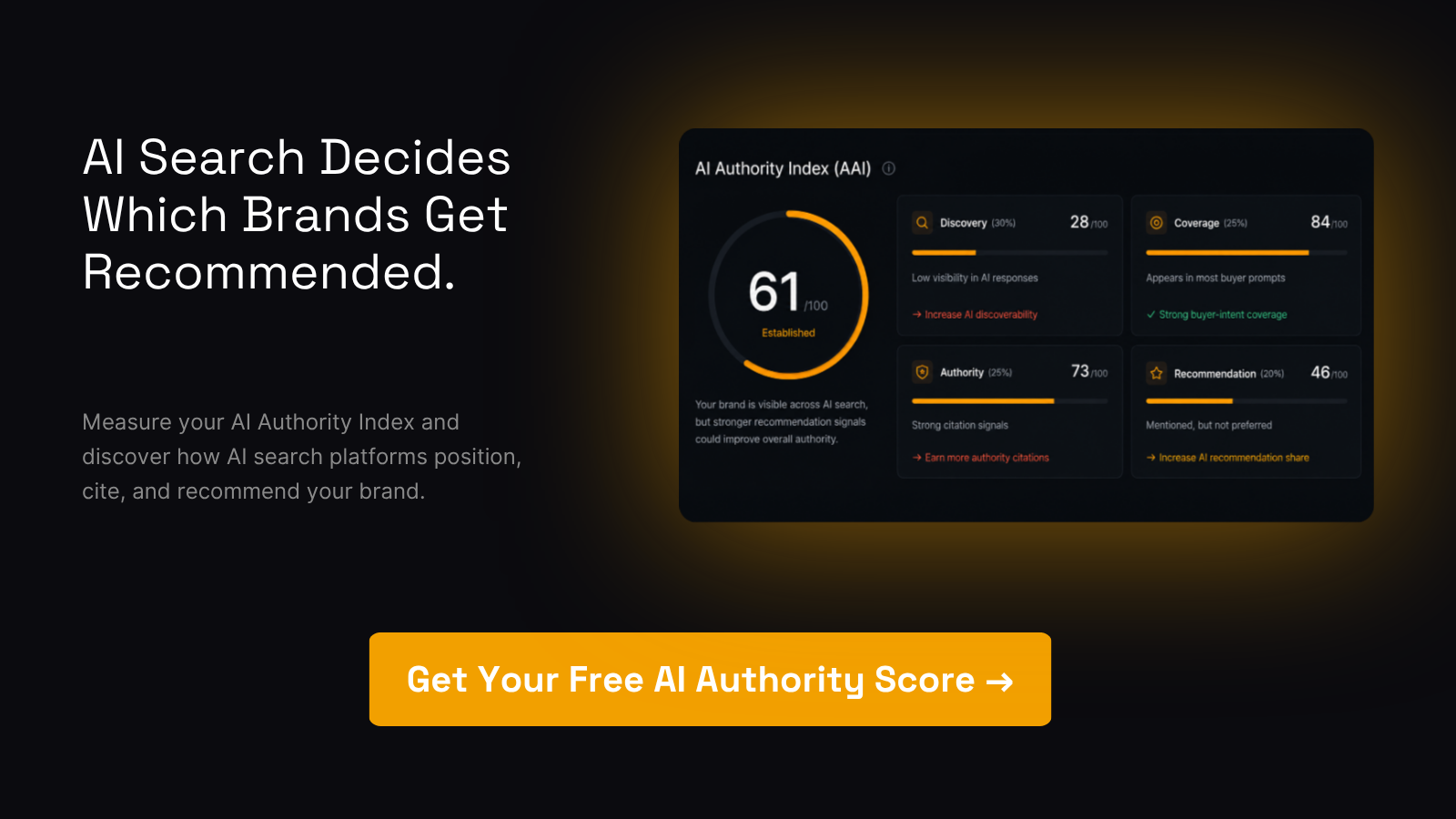
The Free AI Visibility Scan is the place to start, giving a baseline read on where a brand currently stands across assistants and markets. From there, the Starter plan at $99 per month covers ongoing monitoring for teams just beginning to track recommendation share, while Growth at $349 per month and Enterprise at $795 per month add deeper competitive benchmarking and multi-brand support as the program scales. Teams that want a lighter recurring check can use the Monthly AI Visibility Report at $59 per month to track progress without a full platform subscription.
FAQ
How to get ChatGPT to recommend your brand?
Submit a complete, accurate product feed with the correct target_country field for each market, and build localized product pages with separate language records rather than tagged translations. Pair that with authoritative local-language content, since ChoiceEval research shows models default to whatever is best represented in their training data when signals are thin.
Which AI is best for product recommendations?
There's no single best assistant for this, since ChatGPT, Gemini, and Claude each pull from different retrieval mechanisms and carry different regional tilts, as auditing research on brand repetition rates shows. The more useful question is how your product performs across each one in the specific markets and languages you sell in, which is what ongoing benchmarking is designed to answer.
Can ChatGPT sell products?
ChatGPT can surface and recommend products through its shopping features, using feeds submitted via OpenAI's Agentic Commerce Protocol, but the transaction itself still typically completes through the merchant's own channel. Its role today is closer to discovery and recommendation than a full checkout replacement.
How do I get AI to recommend my business?
Start by measuring whether you're currently being recommended, in which markets, and in which languages, since the gap is often invisible until tested properly. From there, fixing feed data, localizing content, and tracking recommendation share over time through a platform like AuthorityLayer turns a one-off guess into a measurable program.
Sources
The language-and-exit-IP probe and the ChoiceEval bias audit are both peer-reviewed-adjacent arXiv papers worth reading in full. OpenAI's commerce integration guide and its feed schema reference cover the technical requirements directly from the source.
- The Language of the Question Selects the Market: Query Language and Exit IP as Separable Factors in Commercial Recommendations from a Generative Search Interface
- Get Started – Agentic Commerce | OpenAI Developers