How to Check If ChatGPT Recommends Your Brand
Discover how to quickly check if ChatGPT recommends your brand with easy prompts and a simple checklist, all in under 30 minutes.
· 13 min read

The fast answer: open an incognito ChatGPT session, run six to ten buyer-intent prompts about your category, and log whether your brand gets named, described correctly, and cited with a source link. You'll have a real signal in under 30 minutes. Here's the checklist to run right now.
- Open a fresh, logged-out or incognito chat. No memory, no history, no personalization skewing the answer.
- Run the same set of buyer prompts twice — once with browsing on, once off — and write down exactly what comes back.
- Log three things per prompt: mention (yes/no), position in any list, and whether a source URL backed the claim.
Pro Tip: Note the model version (GPT-4o, GPT-5, etc.) every time you test. Recommendations shift between model updates, and without that label your log becomes useless six months from now.
Key Takeaways
Checking whether ChatGPT recommends your brand requires a controlled manual audit for a fast diagnostic, followed by standardized multi-engine monitoring to track real change over time.
| Point | Details |
|---|---|
| Run a controlled manual test | Use fresh incognito sessions, six to ten buyer prompts, and log mention, position, and citation for each. |
| Separate mention from citation | A name-drop without a linked source is a weaker signal than a cited recommendation. |
| Watch third-party sources | Your own site typically drives only 2% to 6% of AI citations, so editorial coverage matters more than homepage edits. |
| Prioritize fixes by speed | Fix schema and page copy in weeks; pursue third-party corrections and editorial mentions over months. |
| Move to standardized tracking | Authoritylayer runs canonical prompts across ChatGPT, Claude, Gemini, and Perplexity on a fixed cadence to replace one-off snapshots with trendable data. |
Table of Contents
- How to Check If ChatGPT Recommends Your Brand: What Counts as a Mention
- How Do You Manually Check ChatGPT Brand Mentions?
- What Automated Tools Track That Manual Checks Miss
- What Do Your Mention and Citation Rates Actually Mean?
- What Should You Fix First After a Bad Audit?
- Why Standardized Monitoring Beats One-Off Manual Checks
- Common Mistakes That Produce False Results
- What Practitioners Get Right About AI Visibility Testing
- See Exactly Where Your Brand Stands With ChatGPT
- Sources
- FAQ
How to Check If ChatGPT Recommends Your Brand: What Counts as a Mention
Not every appearance of your brand name in a ChatGPT response means the same thing, and treating them as equal is the fastest way to misread your results. There are four distinct outcomes worth tracking separately:
- Direct name mention — ChatGPT says your brand name explicitly, with no ambiguity about which company it means.
- Descriptive mention — the response describes a company matching yours (right category, right feature set) without naming you, often because it's paraphrasing a source that never named you clearly either.
- Explicit recommendation — you appear in a shortlist, a "best for X" answer, or a direct suggestion in response to a comparison prompt.
- Citation — ChatGPT links to a specific page as the source of a claim about you, which OpenAI's own documentation confirms happens when structured metadata and contextual signals align with a shopping or research query.
One mention in one session is noise. A pattern across ten or more prompts, repeated over a week, is a signal worth acting on.
How Do You Manually Check ChatGPT Brand Mentions?
This is the method to check ChatGPT brand mentions without paying for anything, and it takes less time than most marketing meetings. The goal is a controlled, reproducible test, not a casual chat.
Start with a small prompt set. You'll eventually want 20 to 40 buyer-intent prompts covering your full category, but this quick starter list gets you a usable read today:
- "What's the best [category] for [use case]?"
- "Compare [Your Brand] to [Competitor]."
- "I need a [category] tool, what do you recommend?"
- "What are alternatives to [Competitor]?"
- "Tell me about [Your Brand]."
- "What does [Your Brand] specialize in?"
Run each one in a brand-new incognito window with memory turned off, because a warmed session carries context from earlier chats that can quietly bias the output. Practitioner guidance on manual auditing recommends running each prompt with browsing enabled and disabled separately, since the two modes can pull from entirely different sources and produce noticeably different answers.
Log every result in a simple table. Here's the structure that works:
| Field | What to record |
|---|---|
| Prompt text | Exact wording used |
| Mode | Browsing on or off, model version |
| Mentioned? | Yes/no |
| Position | First named, buried in a list, or absent |
| Cited source | URL ChatGPT pulled the claim from, if any |
| Accuracy | Correct description or a mismatch |
Repeat each prompt two or three times. A single response can vary between runs because of how the model samples answers, so one pass tells you almost nothing on its own. Fresh sessions, repeated runs, and consistent wording are what turn a chat transcript into usable data.
Pro Tip: Test the same prompt at different times of day and on different days of the week. If your mention rate swings wildly, you're looking at sampling variance, not a real trend, and you need more runs before drawing conclusions.
What Automated Tools Track That Manual Checks Miss
Manual checks work as a diagnostic. They fall apart as a measurement system the moment you need to track change over time, across competitors, or across more than one AI engine. That's the gap automated monitoring closes.
An automated AI visibility tool runs your prompt set on a fixed cadence, across multiple engines, and stores every raw response so you can audit exactly what was said and when. Platforms built for this, including Ahrefs' Brand Radar and specialist monitoring tools like the ones cataloged in Brand24's roundup of mention-tracking platforms, report mention rate, citation rate, and the actual source list feeding each answer, not just whether your name showed up once.
When you're evaluating a monitoring vendor, check for:
- Coverage across ChatGPT, Claude, Gemini, and Perplexity, not just one engine.
- A fixed prompt set you control, plus the option to add your own.
- Raw response storage, so you can see exactly what the model said, not just a scored summary.
- Competitor benchmarking on the same prompts, run at the same time.
- Exportable data for stakeholder reporting.
The decision rule is simple. Use manual checks when you need a same-day answer to "are we even showing up." Use automated tracking when leadership wants a trend line, when you're managing more than a handful of competitors, or when you need to prove a content fix actually moved the needle. An agent-based tool like agent.ai can also be configured to run scheduled prompt checks, though it requires more setup than a purpose-built visibility platform.
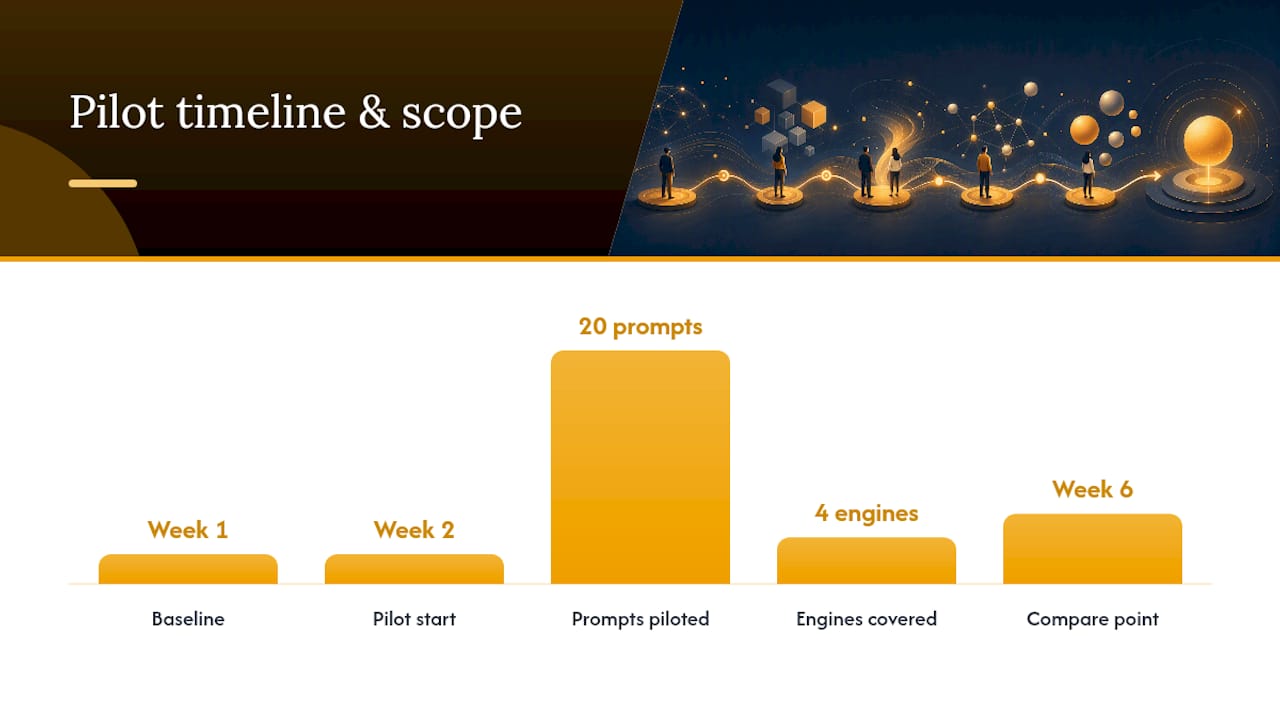
- Week one: run a manual audit to establish a baseline.
- Week two: pilot an automated tool on your top 20 prompts.
- Week six: compare the automated trendline against your manual baseline.
What Do Your Mention and Citation Rates Actually Mean?
Two numbers matter more than any other: mention rate (how often you're named across your prompt set) and citation rate (how often a specific page is linked as the source). They rarely move together, and the gap between them tells you where to focus.
A brand with a high mention rate but a low citation rate is usually well known but poorly documented in the places ChatGPT actually pulls from. AEO Labs' analysis found that a brand's own website typically accounts for only about 2% to 6% of the citations AI engines surface, which means your homepage was never going to be the fix on its own.
- Mention rate: percentage of prompts where your brand appears at all.
- Citation rate: percentage of mentions backed by a linked source.
- Average position: where you land when multiple brands appear in one answer.
- Share of voice: your mention count relative to named competitors across the same prompt set.
Three patterns show up again and again in audits, and each points to a different fix:
- Invisible — you never appear. This usually means thin third-party coverage, not a broken website.
- Inaccurate — you appear, but the description is wrong or your category is misattributed.
- Outranked — you appear, but consistently below two or three competitors in every shortlist answer.
What Should You Fix First After a Bad Audit?
Prioritize by how fast the fix can move the needle, not by how easy it is to implement in-house.
Weeks 0 to 4 — the quick wins. Rewrite your product and brand summary pages in plain, declarative sentences a model can lift directly. Add explicit use-case headers ("Best for small teams," "Built for enterprise reporting"). Implement FAQ schema and product schema, since HubSpot's analysis of ChatGPT's product recommendation behavior found that structured metadata, including offer schema and aggregateRating, directly affects whether a product surfaces in AI-generated shopping answers.

Months 1 to 3 — the leverage plays. Pitch corrections to any third-party site with an inaccurate description of your brand; Ahrefs notes that one accurate paragraph on a respected publication can fix a longstanding AI inaccuracy faster than months of edits to your own site. Update your product feeds, claim your listings on high-trust review platforms, and secure a handful of editorial mentions on sites your citation log shows the model already trusts.
Months 3 to 12 — the compounding work. Build content clusters that directly answer the buyer prompts in your test set. Pursue partnerships with publications that already show up in your competitors' citation lists. Keep testing on a fixed cadence so you can measure whether any of this actually moved your numbers, not just whether it felt productive.
- Fix the highest-visibility inaccuracy first, even if it's a small edit.
- Add schema to your top five product or service pages.
- Pitch two third-party corrections per month.
- Re-test the full prompt set every four weeks.
Pro Tip: After pitching a correction to a third-party publication, wait two to three weeks, then re-run your prompt set. If the citation pattern doesn't shift, the model may not be weighting that source heavily. Try a higher-authority outlet instead.
Why Standardized Monitoring Beats One-Off Manual Checks
A manual check tells you what happened in one session, on one day, under one set of conditions. It's a snapshot, and snapshots are useful right up until someone asks "are we improving." That question needs a trendline, not a screenshot.
Standardized, multi-model measurement runs the same canonical prompt set on a schedule, across every major engine, and stores the raw output so you can audit exactly what changed and when. Instead of one data point, you get a mention-rate curve, a citation trendline, and a competitor benchmark you can hand to a CMO without caveats.
- Manual audits produce a log entry; standardized tracking produces a share-of-voice curve over weeks or months.
- Manual checks are vulnerable to session bias and sampling variance; a 20 to 40 prompt canonical set run repeatedly averages that noise out.
- Manual checks cover whichever engine you happened to test; standardized programs cover ChatGPT, Claude, Gemini, and Perplexity on the same schedule, so you can see whether a fix that worked on one model worked everywhere.
If you're moving from ad hoc checks to a real program, lock in your prompt set size (20 to 40 is the range most practitioners settle on), pick a cadence (weekly is common for active remediation periods), and commit to storing every raw response so nobody has to take your word for a result six months later. Read more on how recommendation share moves across engines if you're building this out for the first time.
Common Mistakes That Produce False Results
Most bad conclusions come from testing shortcuts, not bad luck. Four mistakes show up constantly:
- Testing in a warmed session. Prior chat history biases the response even when you think you started fresh.
- Trusting a single prompt or engine. One prompt on one model is a data point, not a pattern.
- Ignoring browsing on/off differences. The two modes can pull from entirely different sources and disagree with each other.
- Conflating mention with citation. Being named without a linked source is a weaker signal than most teams assume.
Mitigate all four the same way: use fresh incognito sessions per prompt, repeat each prompt several times, keep wording identical across runs, and check more than one engine before drawing a conclusion.
Pro Tip: If you correct an inaccurate third-party page, don't just check ChatGPT once and call it fixed. Re-run your full prompt set a few weeks later and compare the citation pattern against your original log. That's the only way to know the fix actually worked.
What Practitioners Get Right About AI Visibility Testing
The teams that get real traction don't treat this as a one-time audit. They run a manual spot-check to get oriented fast, then immediately shift to recurring, prompt-driven monitoring so the next conversation with leadership has numbers instead of anecdotes.
The mistake I see most often is stopping at the manual audit. It feels like progress because you got an answer, but one incognito session tells you nothing about whether Tuesday's result holds on Friday, or whether a competitor's citation count is climbing while yours sits flat. Start with a one-day manual audit to get oriented. Then pilot weekly automated checks on your top 20 prompts for six to eight weeks before you draw any conclusion about whether your fixes worked.
See Exactly Where Your Brand Stands With ChatGPT
Running the manual audit above by hand every week gets old fast, and doing it across four AI engines by hand is close to impossible. Authoritylayer replaces that manual grind with continuous, multi-engine tracking, running your canonical buyer prompts against ChatGPT, Claude, Gemini, and Perplexity on a fixed schedule instead of whenever someone remembers to check.
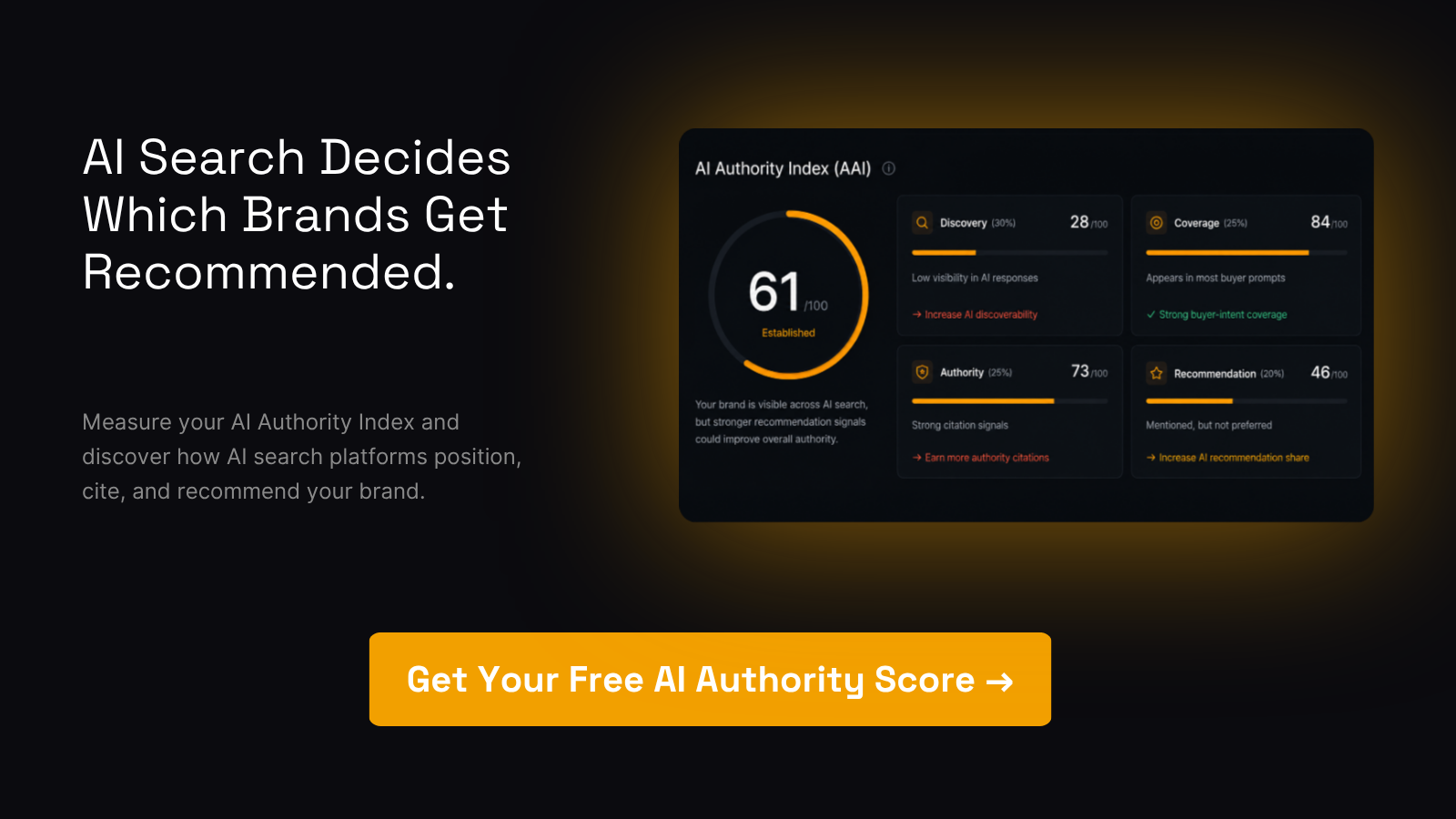
The platform scores mentions against citations separately, benchmarks your recommendation share against named competitors, and ranks fixes by expected impact instead of leaving you to guess which content update matters most. If you've just run your first manual audit and want to see how it compares to a standardized baseline, start with a free AI visibility scan to get your current mention and citation rates across every major engine in one report.
Sources
A handful of resources are worth bookmarking if you're building this out as an ongoing program rather than a one-time check.
- ChatGPT Product Recommendations: How to Make Sure You Are One in 2026
- Using shopping research in ChatGPT | OpenAI Help Center
- How to Check if ChatGPT Mentions Your Brand (2026 Tutorial)
FAQ
How Do You Get ChatGPT to Recommend Your Product?
Get accurate, well-structured information about your product onto third-party sites ChatGPT already trusts, add product and FAQ schema to your own pages, and make sure your category and use cases are stated in plain, unambiguous sentences.
How Do I Get My Business Ranked on ChatGPT?
There's no ranking system to game the way there is with traditional search. Focus instead on being named accurately and cited by credible sources across the buyer-intent questions your prospects actually ask.
How Can I Get AI to Recommend My Business Over Competitors?
Audit which sources your competitors get cited from that you don't, close that gap with editorial outreach and accurate structured data, then track share of voice over time with a tool like Authoritylayer instead of guessing from occasional manual checks.
Is a Single ChatGPT Chat a Reliable Test of My Brand's Visibility?
No. A single session is a snapshot that can vary due to sampling randomness, personalization, and browsing mode; treat it as a diagnostic starting point, not proof of an ongoing trend.
How Often Should I Re-Check My AI Visibility?
Weekly checks work well during active remediation periods; a monthly cadence is usually enough once your mention and citation rates have stabilized.