Turn Paid AI Tests into Organic Visibility, Playbook for Marketers
Practical playbook for marketers: measure paid AI tests, convert winning messages into extractable organic answers, and benchmark AI visibility with...
· 11 min read

For fast proof that a message works in AI assistants, paid placement wins; for durable brand presence in AI-generated answers, organic citation building wins. Paid lift typically shows up within days and fades once spend stops, so watch mention rate in the first two to four weeks. Organic gains build over months but compound, with citation share as the metric that tells you it is working.
TL;DR:
- Paid AI placements generate immediate visibility that diminishes quickly after spending stops, while organic citations build slowly and tend to compound over time.
- Organic citations depend on content clarity and authoritative web presence, which makes their growth more sustainable and less volatile than paid options.
- Key metrics include mention rate, citing pages, extractable-answer share, and recommendation share, with measurement requiring baseline and control comparisons for accuracy.
- Running short paid tests to identify effective messaging followed by converting successful ad copy into structured content maximizes organic growth potential.
- Combining paid and organic strategies with proper governance creates durable AI visibility, emphasizing the importance of ongoing measurement and strategic conversion.
Table of Contents
- How paid AI placements work versus how organic citations get earned
- Metrics and signals that define AI visibility success
- Deciding when to use paid, organic, or both
- A step-by-step playbook for turning paid tests into organic authority
- Organic tactics that raise your odds of being cited
- Running AI visibility experiments with real governance
- How AuthorityLayer supports this measurement work
- Why measurement discipline matters more than the channel debate
- Get a clear read on your AI visibility starting point
- FAQ
- Sources
How paid AI placements work versus how organic citations get earned
Paid and organic AI visibility run on completely different mechanics, which is why they produce different results and different decay curves.
On the paid side, OpenAI documents that ChatGPT ads are visually separated from the assistant's answers and do not change what the model generates organically. Ads run through an auction, reach specific subscription tiers, and show up as labeled placements next to a conversation rather than inside it. Google follows a similar separation: ads can appear around AI Overviews using existing auction and targeting signals, but they do not alter the generated overview text itself, according to Google's own guidance on AI Overview ads.
Organic citation works on a different input entirely. A model cites or mentions a brand because its content answers a question clearly enough to extract, because the entity is well defined across the web, and because the technical structure (schema, canonical URLs, clean metadata) makes the page easy to parse. There is no auction to win here, only clarity to earn.
That difference shows up directly in the timeline:
- Paid placement produces a measurable spike within the campaign window and fades once budget stops.
- Organic citation builds slowly, often over months, but tends to compound rather than reset.
- Paid relies on budget and targeting; organic relies on content structure and entity authority.
- Both are measured by overlapping but distinct signals: impression and click data for paid, mention and citation rate for organic.
A live experiment from FileRoom ran this exact comparison week by week and found paid visibility lift was real and measurable, but it decayed once the campaign ended, while organic gains held and compounded over the same period. That single finding is the clearest argument for treating the two channels as complementary rather than interchangeable, a theme Brandwatch's guidance on social media echoes for a different channel: organic sustains trust, paid accelerates reach.
Metrics and signals that define AI visibility success
Traditional SEO dashboards were built around rankings and clicks. AI visibility needs its own scoreboard, because a brand can be cited heavily in AI answers while earning almost no clicks at all.
Start with primary metrics:
- Citation or mention rate: how often a brand is named in response to relevant prompts.
- Distinct citing pages: the number of unique pages a model pulls from when it cites you, a proxy for topical depth.
- Extractable-answer share: the percentage of your content formatted in a way models can lift directly into an answer.
- Recommendation share: how often you are the brand recommended versus simply mentioned alongside competitors.
Secondary KPIs matter too: branded search lift after an AI mention, AI-assisted conversions tracked through attribution models, and retention of sessions that originated from an AI referral. None of these replace the primary four, but they connect AI visibility to revenue, which is what gets budget approved.
Experimental measurement is non-negotiable. Set a baseline period before any paid test, run a control set of prompts or markets that receive no paid spend, and sample citation data on a consistent cadence (weekly is a reasonable default) so you can actually read a lift curve against a decay curve instead of guessing at both.

Pew Research found that searches showing an AI summary led to fewer clicks on traditional results compared to when no summary appeared, and very few visits generated a click from inside the summary itself. That gap is the entire reason click-through rate stops being a reliable AI visibility metric: Google users click far less when an AI summary appears, so citation and mention data have to carry the weight that clicks used to carry.
Deciding when to use paid, organic, or both
The right channel depends on what job you are trying to do this quarter, not on which channel sounds more sustainable in a deck.
Paid AI placement fits specific, time-boxed jobs:
- Proving a concept before committing content budget to it.
- Testing which messaging resonates before a product launch.
- Covering a time-sensitive announcement where organic citation would arrive too late to matter.
Organic citation building fits a different set of jobs:
- Establishing durable authority on topics core to the brand.
- Lowering the long-run cost per mention, since there is no ongoing auction spend.
- Building the entity signals that make every future paid or organic effort easier.
The strongest practitioner move is hybrid: run a short paid test to learn fast, then convert whatever messaging wins into extractable organic content. A typical test might run four to six weeks on a modest budget, enough to see a clean lift and decay pattern without overcommitting before you know what works.
Pro Tip: Treat your best-performing paid ad copy as a content brief, not just a media asset. The phrasing that earns clicks in an ad is often the same phrasing a model will extract into an answer once it lives on a well-structured page.
Stop paid spend once the lift curve flattens and no new messaging insight is emerging. Scale organic investment once you have two or three content patterns that reliably earn citations across multiple prompts.
A step-by-step playbook for turning paid tests into organic authority
Running paid and organic as one coordinated system, rather than two separate budgets, is what actually produces durable AI visibility.
- Set the hypothesis and KPIs. Pick one use case (a product category, a competitive comparison, a buyer question) and define the primary metric you expect to move, whether that is mention rate or recommendation share.
- Establish a baseline and a control. Measure current citation rates for two to four weeks before any spend, and hold out a comparable set of prompts or markets that receive no paid test, so you have a true control to compare against.
- Run the paid test (3 to 8 weeks). Target the audience and prompts relevant to your hypothesis, track which prompts trigger your ad, and log citation or mention data alongside standard ad metrics.
- Identify the winning messages. Pull the ad variants and phrasing that produced the strongest engagement or the clearest citation lift during the test window.
- Convert winners into extractable content. Rewrite the winning messaging into concise answer blocks, FAQ entries, and dedicated entity pages that a model can parse and lift directly.
- Monitor the decay and the handoff. Watch paid lift fade after spend stops while tracking whether the newly published organic content begins picking up citations in the same window.
- Operationalize it. Standardize a UTM schema for every paid test, assign ownership for prompt tracking, and set a reporting cadence (biweekly or monthly) so the paid-to-organic handoff becomes routine rather than a one-off project.
This sequence is also where a measurement playbook built specifically for AI assistants helps, since the governance step (who owns prompt tracking, how often results get reviewed) is often where these experiments quietly die.
Organic tactics that raise your odds of being cited
A handful of concrete edits move the needle more than a general content overhaul.
- Write a concise, 40 to 60 word extractable answer near the top of any page meant to answer a specific question. That length matches what guidance on AI search optimization recommends for formatting content a model can lift cleanly.
- Build FAQ blocks around the exact phrasing buyers use when they prompt an AI assistant, not just the phrasing you'd use in a headline.
- Add schema markup, consistent entity naming, and canonical URLs so a model has no ambiguity about who you are or which page is authoritative.
- Publish original data, clearly attributed, since original evidence is one of the few things a model cannot get from a competitor's page instead of yours.
- Build topical hubs with internal links between related pages, which increases the number of distinct pages a model might pull from when it cites you.
Pro Tip: Audit your top ten most-cited competitor answers for structure, not just content. If every one of them opens with a direct answer in the first sentence, that is the pattern to copy, not the wording.
A practical breakdown of optimizing for ChatGPT covers similar formatting principles if you want a second reference point on structuring content for retrieval.
Running AI visibility experiments with real governance
Treating AI visibility as a real channel means giving it the same experimental rigor as any paid media test, not just vibes and a screenshot of a good answer.
- Keep a true control group for every paid test so lift is measured against something, not just against last month.
- Sample on a fixed cadence (weekly is usually enough) and require a pattern across multiple cycles before calling a result real.
- Read decay curves honestly: a sharp drop after spend stops confirms the lift was paid-driven and should trigger the conversion-to-organic step, not another round of spend.
- Assign a clear owner for prompt tracking and reporting, and put AI visibility metrics on the same reporting cadence as paid media or SEO KPIs.
Bain's research on AI in marketing found that marketing leaders who centralize AI strategy and redesign workflows around it are far more likely to report real revenue or cost benefits, which is the same argument for giving AI visibility a governance structure instead of running it as a side experiment.
How AuthorityLayer supports this measurement work
We built a benchmarking layer that marketing teams can use to track recommendation share, flag visibility gaps against competitors, and score positioning through a single index rather than a pile of disconnected screenshots. The Starter Plan and a free AI Visibility Scan are both available as a starting point for teams running the kind of paid-to-organic experiments described above.
Why measurement discipline matters more than the channel debate
The paid versus organic argument misses the point. Treat AI visibility as a channel you test, baseline, and govern, the same way you would treat a new ad platform, and the paid-versus-organic question mostly answers itself. My checklist for any team starting out: pick one use case, set a baseline, run a short paid test, and convert whatever wins into organic content. That order matters more than which budget line you pull from.
— Geraldine
Get a clear read on your AI visibility starting point
We can give you that baseline directly: a free AI Visibility Scan benchmarks your current recommendation share against competitors and flags the specific gaps worth closing first.
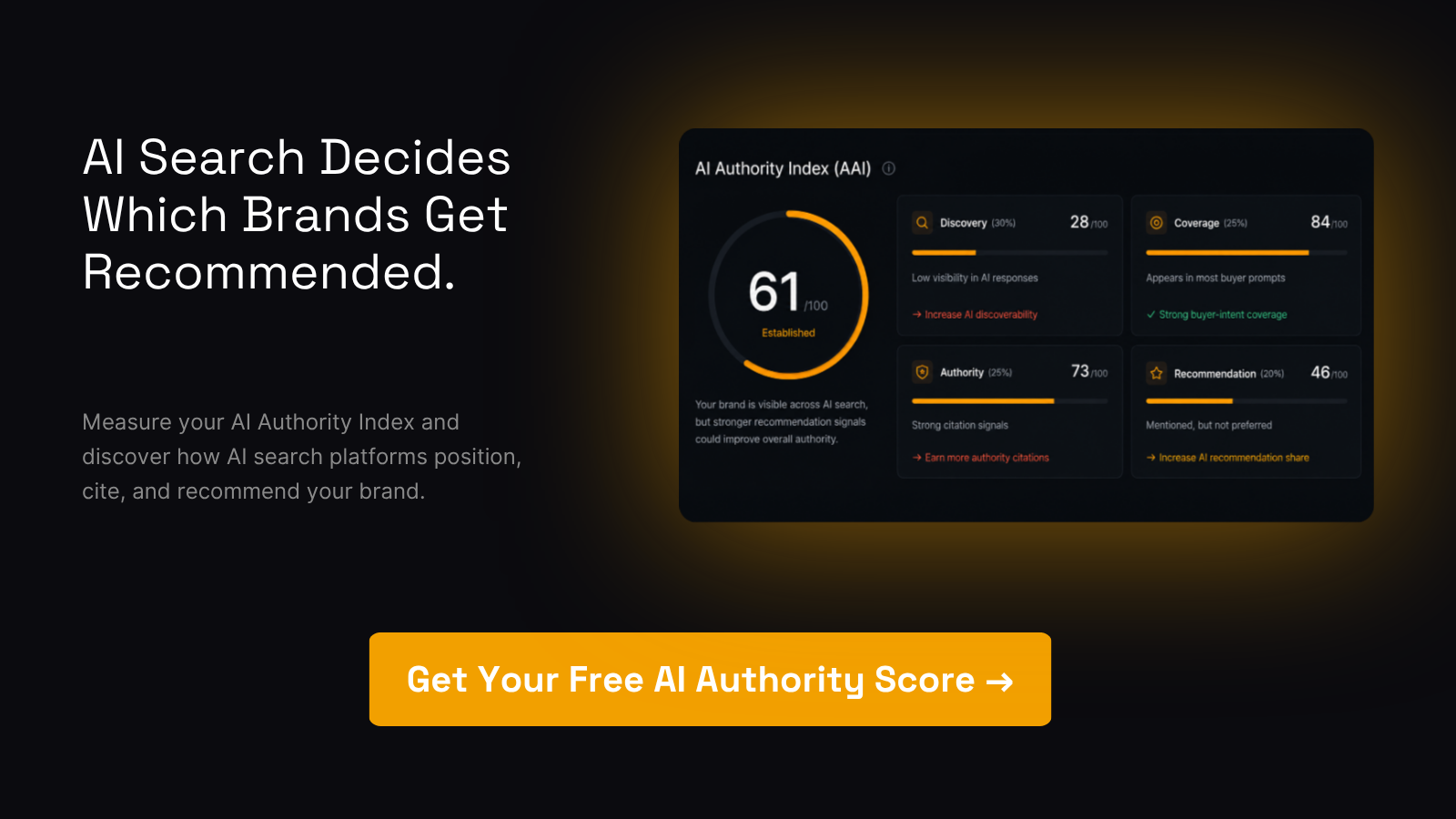
From there, the Starter Plan at $99 per month gives you ongoing tracking and prioritized recommendations instead of a one-time snapshot, and teams managing multiple brands or deeper competitive sets can look at Growth at $349 per month or Enterprise at $795 per month. Start with the free scan and see where your gaps actually are.
FAQ
What is the best AI visibility platform?
The best platform depends on whether you need a one-time benchmark or ongoing tracking. We built AuthorityLayer specifically to score recommendation share and flag competitive gaps through a single index, with a free AI Visibility Scan as a starting point and paid plans for continuous monitoring.
Is SEO considered paid or organic?
SEO is organic by definition: it covers the unpaid work of earning visibility through content, structure, and authority rather than through an auction or ad spend. Paid search and paid AI placements are a separate channel that can inform SEO strategy but are measured and billed differently.
What's the difference between free AI and paid AI?
Free AI tiers typically show ads alongside assistant answers, while paid subscription tiers often remove or reduce that advertising. In both cases, OpenAI confirms that ads are kept visually separate from the assistant's generated response and do not change what the model says organically.
What is the difference between organic and paid reach?
Organic reach comes from content and authority that a platform or model surfaces without payment, while paid reach comes from buying placement through an auction or ad budget. Paid reach tends to spike quickly and fade once spend stops, while organic reach builds more slowly but tends to compound and persist.
Sources
- Ads in ChatGPT — OpenAI Help
- Google users are less likely to click on links when an AI summary appears in the results — Pew Research Center
- Can You Pay Your Way Into an AI Answer, or Do You Have to Earn It? We Tested Both — FileRoom
- Organic vs Paid Social Media: Finding the Right Balance for Success — Brandwatch