CMOs: AI Monitoring Cost & Three-Year TCO Ranges
AI monitoring cost for CMOs: budget ranges from $29–$149/month to $1,000–$10,000/year, a three year TCO framework, and the contract questions to push back on.
· 9 min read

Budget-tier AI visibility monitoring runs roughly $29 to $149 a month, mid-market platforms land around $1,000 to $10,000 a year, and enterprise deployments frequently exceed $10,000 annually before implementation. The two variables that move your bill the most: how many AI platforms you monitor and how many prompts you test each month. Spend fifteen minutes before any vendor call tallying your target platforms, monthly prompt volume, and brand count. That number, not the sales deck, sets your real budget.
TL;DR:
- Monitoring multiple AI platforms significantly increases costs; tracking four platforms can double or triple your bill compared to monitoring one.
- Ongoing prompt volume and testing activities directly impact costs, with overages potentially raising expenses during intense research periods.
- Flat-rate or enterprise pricing models tend to provide better value for teams with consistent monitoring needs, reducing the risk of budget blowouts.
- Enterprise budgets typically start above $10,000 annually and can reach $200,000 or more with full implementations, custom modules, and multi-brand tracking.
- Contract terms often include auto-renewals and escalation clauses, so clarifying cancellation windows and total three-year costs is crucial before signing agreements.
Table of Contents
- What Actually Drives Your AI Monitoring Cost
- Per-Prompt, Per-Platform, or Flat-Rate: Which Pricing Model Fits?
- What Do Small, Mid-Market, and Enterprise Budgets Actually Look Like?
- Building a Three-Year TCO and Measuring Pilot ROI
- What Contract Terms Should You Push Back On?
- What Sellers Actually Hear in Pricing Conversations
- Benchmark Your Cost Before You Sign Anything
- Sources
- FAQ
What Actually Drives Your AI Monitoring Cost
Vendors don't price AI visibility monitoring off a single dial. Five variables interact, and most buyers only think to ask about one or two before signing.
Platform coverage is the biggest lever. Monitoring ChatGPT alone costs less than tracking ChatGPT, Gemini, Claude, and Perplexity together, and skipping a platform creates a coverage gap you won't notice until a competitor shows up recommended there and you don't.
Prompt and test volume scales cost directly under per-prompt billing. Run 200 prompts a month during a competitive research push and your bill can spike well past what you budgeted for routine tracking.
Brand and sub-account counts compound fast. Agencies managing several client brands, or enterprises tracking multiple product lines, often discover the "per brand" line item was buried in the fine print, not the headline price.
Data depth matters more than it looks on a pricing page. A platform handing you raw mention exports pushes the analysis work back onto your team, while one that surfaces a composite AI Visibility Score with prioritized recommendations removes that labor cost entirely.
Implementation and integration fees show up as one-time charges for connecting CRM data, historical benchmarking, or custom dashboards. These rarely appear in the advertised monthly price.
Cost drivers worth confirming before you sign anything:
- Number of AI platforms monitored (ChatGPT, Gemini, Claude, Perplexity, others)
- Monthly prompt or test volume included, and the overage rate above it
- Number of brands, products, or sub-accounts tracked
- Whether pricing includes raw data only or a synthesized visibility score
- One-time setup, onboarding, or integration fees
Per-Prompt, Per-Platform, or Flat-Rate: Which Pricing Model Fits?
AI brand tracking pricing generally falls into three structures: per-prompt, per-platform, and flat-rate, with hybrid models blending a base fee and usage overages becoming increasingly common.
- Per-prompt pricing charges by test volume. It works well for lean teams running occasional spot checks, but exploratory research season can quietly triple your bill.
- Per-platform pricing charges a flat fee per AI assistant monitored. It's predictable month to month, but it can tempt you to drop a platform to save money, which is exactly how coverage gaps happen.
- Flat-rate and tiered pricing bundles platforms, prompts, and seats into one number. It tends to lower total cost of ownership for teams running consistent, ongoing monitoring rather than sporadic bursts.
- Hybrid models combine a platform fee with usage-based overages. Read the overage rate closely. It's often where the real cost lives.
Agencies and high-volume research teams typically come out ahead on flat-rate or enterprise tiers, since per-prompt pricing penalizes exactly the exploratory work agencies do most.
If the model breaks down under moderate growth, it will break your budget within a year.*
What Do Small, Mid-Market, and Enterprise Budgets Actually Look Like?
The gap between tiers isn't marketing spin. It reflects real differences in platform coverage, prompt depth, and how much interpretation the platform does for you.
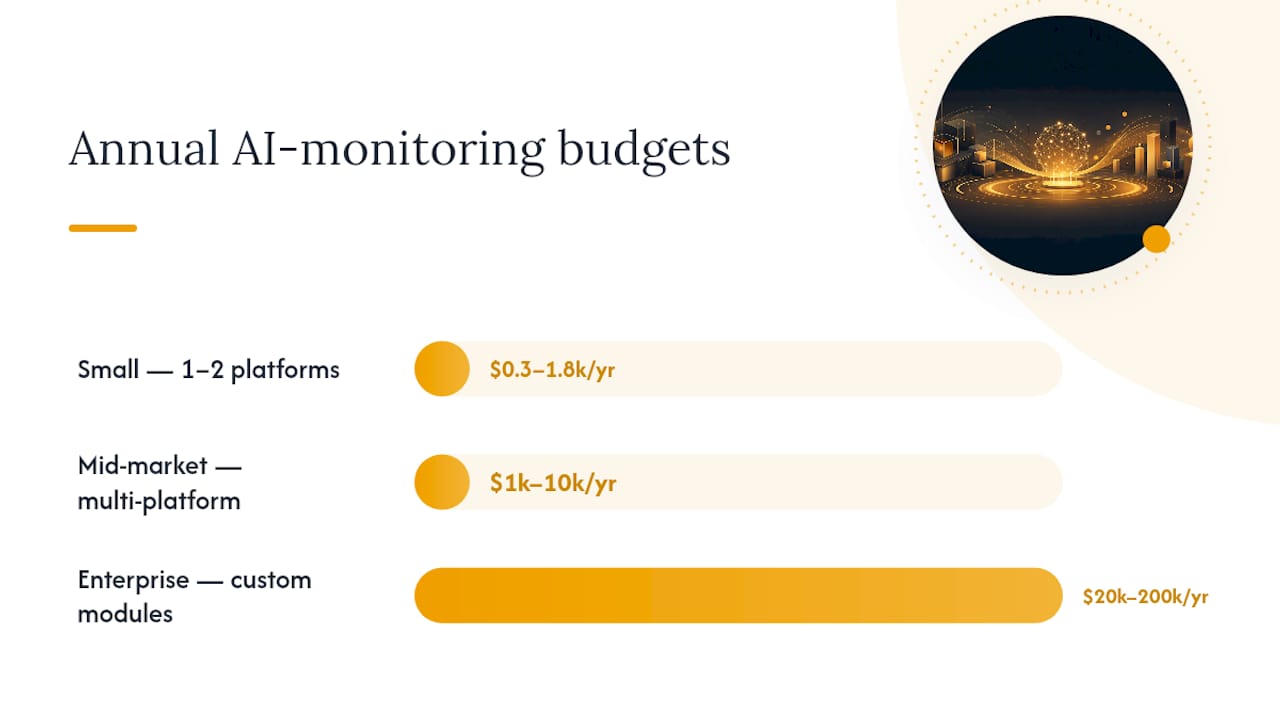
Small team budgets ($29 to $149 a month) typically cover one or two AI platforms, limited prompt volume, and basic mention tracking. Expect raw data more often than a synthesized score at this tier, which means someone on your team is doing the analysis.
Mid-market budgets (roughly $1,000 to $10,000 a year) generally add multi-platform coverage, higher prompt allowances, multiple seats, and a composite visibility score with prioritized recommendations. This is where most standalone marketing teams land.
Enterprise budgets start above $10,000 a year, and full implementations with custom modules, multi-brand tracking, and dedicated support can run $20,000 to $200,000 or more annually. Enterprise pricing varies widely because it's negotiated, not published, and it depends heavily on brand count, data retention, and integration scope.
A team that starts at 500 prompts a month and grows to 1,500 within a year can see per-prompt costs triple, while a flat-rate mid-market plan absorbs that growth at no additional charge.
Building a Three-Year TCO and Measuring Pilot ROI
A vendor's sticker price is the start of your total cost of ownership, not the end of it. Enterprise software pricing hides 30 to 50 percent variance for comparable capability, usually buried in integration fees, data export limits, and staffing needs.
Build your three-year TCO with these line items:
- Subscription cost at current tier, projected forward with expected usage growth
- One-time implementation, onboarding, and integration fees
- Internal analyst time needed to interpret raw data, if the platform doesn't provide a composite score
- Overage charges under your specific pricing model at 2x and 3x volume
During a pilot, capture your baseline visibility score, recommendation share versus competitors, and any indexing lift across the AI visibility metrics that matter to your category before you extrapolate ROI. A pilot that moves your visibility score from 22 to 38 over 60 days gives you a concrete number to defend the renewal budget with, versus a gut feeling.
Pro Tip: Push for annual billing discounts and ask whether services can be bundled into the subscription rather than billed separately. Vendors have more room to negotiate on bundling than on the base price.
What Contract Terms Should You Push Back On?
Vendor complaints in AI brand monitoring cluster around one thing more than any other: contract mechanics, not product quality. Auto-renewal traps and about two to three months' notice windows catch marketing teams off guard almost every time.
Run these questions during procurement:
- What is the cancellation window, and does the contract auto-renew by default?
- What is the total all-in cost across three years, including any built-in price escalators?
- Which AI platforms and data sources are covered on day one, and which are roadmap promises?
- What is the false-positive rate on brand mentions, and can you see sample real-data output before signing?
- Does the platform provide prioritized, actionable recommendations, or only raw exports you have to interpret yourself?
Escalate if a vendor won't put the cancellation terms in writing before you sign, or if their "sample data" turns out to be synthetic demo content rather than real prompt responses.
What Sellers Actually Hear in Pricing Conversations
Buyers rarely push back on the sticker price first. They push back on the renewal clause. Auto-renewal terms and unclear escalators come up in nearly every serious procurement conversation, and that pattern tells you where the actual risk sits: not in whether the tool works, but in whether you can leave cleanly if it doesn't.
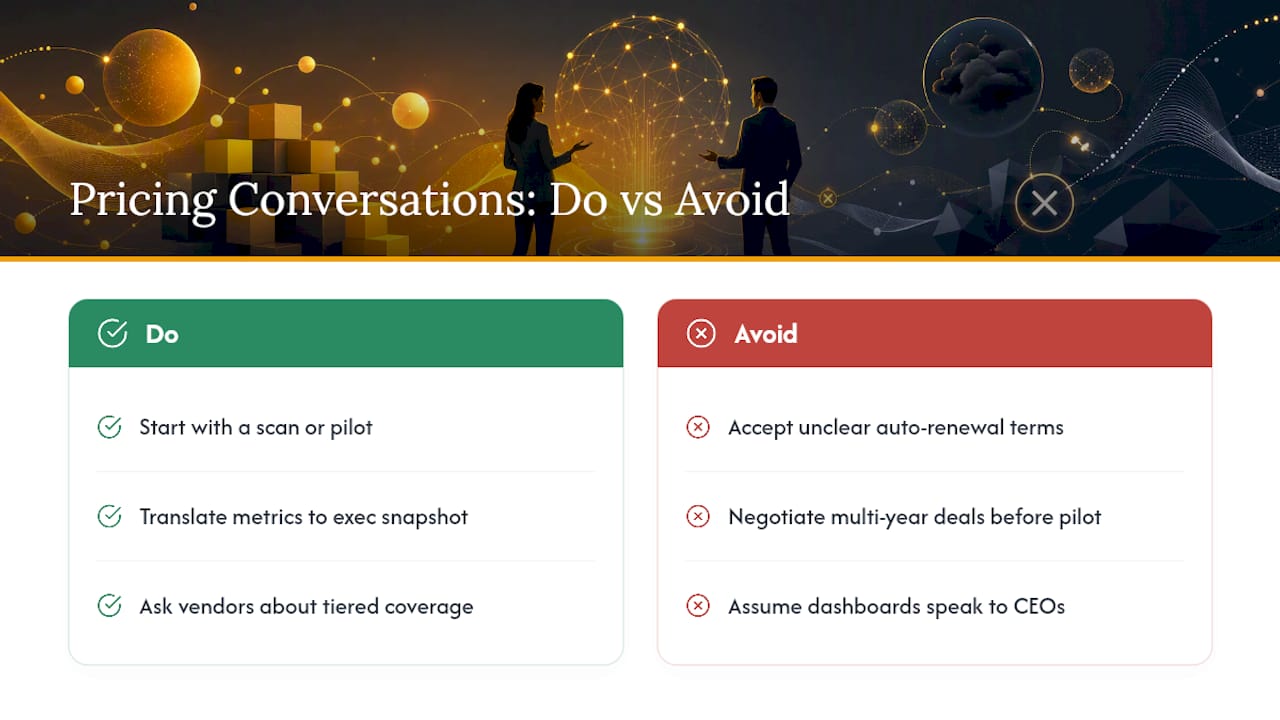
The other recurring gap is translation. A marketing leader can look at a dashboard full of mention counts and still not know what to tell the CEO. That's the real value of something like a Monthly AI Visibility Report: it converts raw tracking data into an executive-level number and a short list of what to fix first, which is what actually gets budget approved.
Some vendors offer tiers that follow the pattern this guide describes: platform coverage and prompt depth scale the price, and enterprise multi-brand needs get a custom quote rather than a published rate. If you're building a business case, start with a scan or a pilot before you negotiate a multi-year term.
— Geraldine
Benchmark Your Cost Before You Sign Anything
Authoritylayer is the alternative to guessing at vendor quotes: request a Monthly AI Visibility Report before your next procurement call and walk in with a number instead of a hunch. The report gives you an executive summary, a current AI Visibility Score against named competitors, and a prioritized list of what's actually costing you recommendation share right now.
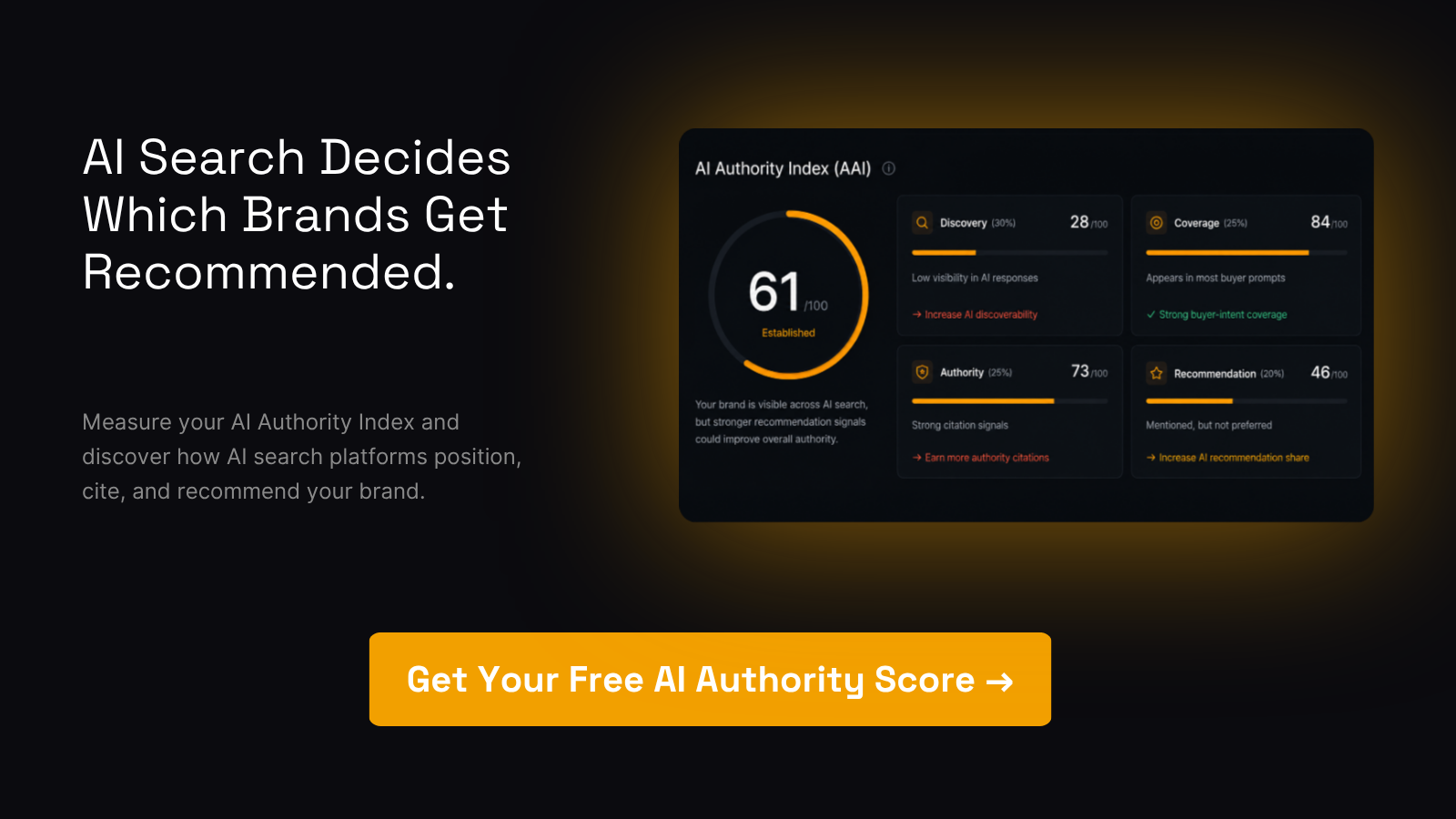
That benchmark does double duty. It tells you where you stand today, and it gives your finance team a concrete baseline to measure any vendor's promised ROI against during a pilot. If you're still deciding whether to build this tracking in house or buy it, the manual versus automated tracking breakdown lays out the real labor cost either way. For a free first look at platform coverage gaps, the multi-LLM audit tool checks your presence across models at once, no commitment required. When you're ready for the executive version, request the visibility report and bring real numbers to the table.
Sources
For deeper benchmarking data, see the AI brand tracking pricing guide, the enterprise marketing automation pricing benchmark, and Authoritylayer's own visibility metrics playbook.
- Brand monitoring buyer's guide — 12 questions | Council of 5
- Marketing Automation Software Pricing 2026 | Enterprise Benchmark
FAQ
How Much Does AI Monitoring Cost Per Month?
Budget-tier tools run $29 to $149 a month, mid-market platforms cost roughly $1,000 to $10,000 a year, and enterprise pricing typically starts above $10,000 annually with custom quotes.
What Is the Biggest Hidden Cost in AI Visibility Monitoring?
Analyst labor to interpret raw mention exports is the most commonly missed cost, since platforms without a composite visibility score push that synthesis work onto your team.
Should I Choose Per-Prompt or Flat-Rate Pricing?
Per-prompt pricing suits occasional, low-volume checks, while flat-rate or tiered pricing generally lowers total cost for agencies and teams running consistent, ongoing monitoring.
What Should I Ask a Vendor Before Signing a Contract?
Ask for the cancellation window in writing, the total three-year all-in cost, which platforms are covered on day one, and whether the platform provides prioritized recommendations or raw data only.
How Do I Estimate ROI During a Pilot?
Capture your baseline AI Visibility Score, track recommendation share against named competitors over 60 to 90 days, and compare that lift against your pilot cost before committing to an annual term.